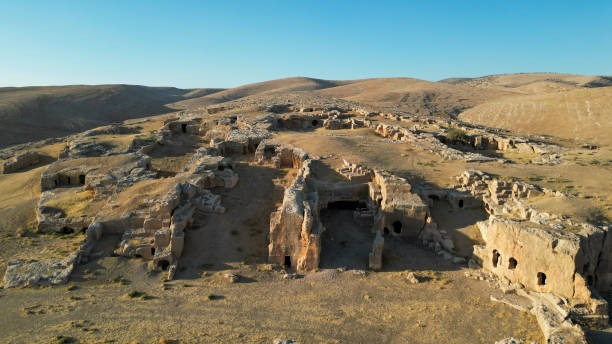
The history of ancient Mesopotamia is a rich tapestry woven from the threads of human civilization, where the earliest signs of societal organization emerged.
Nestled between the Tigris and Euphrates rivers, this region, often referred to as the “Cradle of Civilization,” served as a fertile ground for innovation, culture, and the birth of writing.
Exploring this ancient world is like taking a serene stroll through time, revealing the profound connections between humanity and the environment.
As we meander through the history of Mesopotamia, we find ourselves in a land that flourished due to its unique geography. The rivers provided not only sustenance through irrigation but also facilitated trade and communication. This natural bounty allowed communities to grow, leading to the establishment of some of the world’s first cities, such as Ur, Babylon, and Nineveh. Each city was a vibrant hub of activity, where artisans, traders, and farmers came together, sharing their lives and their stories.
The Sumerians, often recognized as the first major civilization in Mesopotamia, made remarkable contributions to society. Around 3500 BCE, they began to develop city-states, each governed by its own king and deity. The Sumerians were innovators, creating the earliest known form of writing, cuneiform, which was etched onto clay tablets. This monumental development opened up new avenues for record-keeping, literature, and the arts, allowing for the preservation of knowledge across generations.
As we delve deeper into this ancient narrative, we encounter the Akkadians, who rose to prominence around 2334 BCE under the leadership of Sargon the Great. They united the Sumerian city-states, forming the first known empire. This era marked a significant shift in governance and culture, blending Sumerian traditions with Akkadian influences. In this melting pot of ideas, the foundations of law, religion, and literature began to flourish, setting the stage for future civilizations.
A small shift toward balance occurs as we reflect on the religious beliefs that permeated Mesopotamian life. The people worshipped a pantheon of gods, each representing various aspects of nature and society. Temples, known as ziggurats, were not only places of worship but also centers of administration and commerce. These towering structures embodied the connection between the divine and the earthly, emphasizing the importance of harmony in daily life.
The Babylonians, who followed the Akkadians, brought forth the famous Code of Hammurabi, one of the earliest written legal codes. This set of laws, inscribed on a stone stele, provided a framework for justice and governance, reflecting the values and norms of society. It is fascinating to consider how these ancient principles continue to echo in our modern legal systems, reminding us of the enduring quest for fairness and order.
As we navigate through the timeline, we arrive at the Assyrian Empire, known for its military prowess and architectural achievements. The Assyrians constructed magnificent palaces adorned with intricate carvings and expansive libraries, such as the one at Nineveh, which housed thousands of clay tablets. These artifacts serve as a testament to the intellectual and artistic achievements of the time, showcasing a culture that valued knowledge and creativity.
The story of ancient Mesopotamia is not solely one of conquest and power; it is also a narrative of resilience and adaptation. The region faced numerous challenges, including invasions, natural disasters, and shifts in trade routes. Yet, each time, the people found ways to rebuild, innovate, and evolve. This spirit of perseverance is a gentle reminder that even in the face of adversity, communities can come together to create something beautiful and lasting.
As we reflect on the legacy of ancient Mesopotamia, we see the profound impact it has had on subsequent civilizations. The innovations in agriculture, mathematics, and astronomy laid the groundwork for future societies. The art of writing transformed communication and storytelling, allowing us to connect across time and space.
In a world that often feels fast-paced and overwhelming, the history of Mesopotamia invites us to slow down and appreciate the roots of our shared humanity. It encourages us to recognize the interconnectedness of our stories, reminding us that the past is not a distant memory but a vibrant part of our present and future.
As we conclude this exploration, we can take inspiration from the ancient Mesopotamians’ ability to harmonize their environment with their aspirations. Their achievements remind us of the importance of community, creativity, and resilience. In a way, their legacy continues to guide us as we navigate our modern lives, encouraging us to foster connections, cherish knowledge, and embrace the journey of growth.
The history of ancient Mesopotamia is more than just a tale of kings and empires; it is a celebration of human spirit and ingenuity. As we carry these lessons forward, may we find ways to honor the past while nurturing a future filled with possibility and understanding. Each step we take on this journey reminds us that we are all part of a much larger narrative, one that has been unfolding for thousands of years and continues to shape our world today.