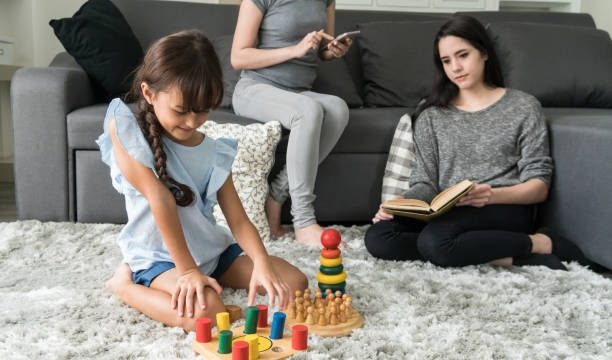
Building spatial awareness in children is an enriching journey that can have lasting effects on their development.
As parents and caregivers, we often focus on nurturing emotional intelligence, literacy, and numeracy, but spatial awareness deserves its moment in the spotlight.
This essential skill not only enhances a child’s ability to understand the world around them but also lays the foundation for future learning in subjects like math, science, and even art.
Spatial awareness refers to the ability to perceive and understand the relationships between objects in space. It encompasses how children recognize shapes, sizes, distances, and how they navigate their environment. Developing this skill can foster problem-solving abilities and creativity, allowing children to explore and interact with their surroundings more effectively.
Creating a playful environment
One of the simplest and most enjoyable ways to help children build spatial awareness is through play. Engaging in activities that involve movement and manipulation of objects can significantly enhance their understanding of space. Think of the joy that comes from building a fort with cushions or constructing a tower with blocks. These activities are not just fun; they encourage children to think critically about balance, structure, and spatial relationships.
When children engage in play that requires them to navigate their environment, they develop a sense of their own physicality. For instance, when they crawl through a tunnel or climb over a small obstacle, they learn about their body’s dimensions in relation to the world around them. This understanding of body awareness is a crucial aspect of spatial development.
Exploring the great outdoors
Nature offers a wonderful backdrop for fostering spatial awareness. Outdoor activities, such as hiking, playing in a park, or even exploring the backyard, provide children with endless opportunities to interact with their environment. As they run, jump, and climb, they begin to understand concepts like distance, direction, and perspective.
Encouraging children to engage with nature not only helps in developing spatial skills but also promotes physical health and emotional well-being. The fresh air and natural surroundings offer a calming effect, making outdoor play an ideal setting for exploration and discovery. As they observe their surroundings, they learn to recognize patterns, shapes, and the distances between various elements of nature.
Incorporating everyday tasks
Everyday activities can also serve as valuable opportunities to enhance spatial awareness. Simple tasks like arranging furniture, organizing toys, or even cooking together can teach children about spatial relationships. When they help set the table, for instance, they learn about spacing and placement. Cooking can introduce them to measurements and proportions, allowing them to visualize how different ingredients fit together.
Encouraging children to think about how things fit in a space is a gentle way to build their spatial reasoning. Asking questions like, “Where do you think this will fit?” or “How many more of these can we add without it falling over?” prompts them to engage in critical thinking about their environment.
Artful expression
Art activities are another wonderful avenue for fostering spatial awareness. When children draw, paint, or sculpt, they are not only expressing their creativity but also working with shapes, sizes, and perspectives. Encouraging them to create three-dimensional art, such as sculptures or collages, can deepen their understanding of how objects occupy space.
Art also offers a chance for children to experiment with symmetry and asymmetry, enhancing their ability to visualize how different elements interact within a given space. This exploration can be a joyful process that nurtures both their artistic expression and spatial reasoning skills.
The beauty of puzzles and games
Puzzles and games are excellent tools for developing spatial awareness. Engaging in activities that require problem-solving, like building with LEGO or completing jigsaw puzzles, allows children to visualize and manipulate objects in their minds. These games challenge them to think about how different pieces fit together, enhancing their understanding of spatial relationships.
Additionally, many board games and card games provide opportunities for children to practice spatial reasoning in a fun and engaging way. Whether it’s navigating a game board or strategizing moves, these games encourage critical thinking and spatial awareness in a relaxed setting.
Encouraging curiosity and exploration
Perhaps one of the most important aspects of helping children build spatial awareness is nurturing their natural curiosity. Encouraging them to explore their environment, ask questions, and seek answers fosters a sense of wonder. This exploration can be as simple as observing how shadows change throughout the day or noticing the different shapes of leaves in the park.
By creating an environment where curiosity is welcomed, you empower children to engage with the world around them. This not only enhances their spatial skills but also instills a lifelong love of learning and exploration.
Fostering connections through play
It’s essential to remember that building spatial awareness is not just about the skills themselves but also about the connections formed during these activities. Engaging with children in play, whether it’s building a block tower or exploring the outdoors, strengthens the bond between caregiver and child. These moments of connection create a safe space for exploration and learning, allowing children to feel supported as they navigate their world.
In conclusion, helping kids build early spatial awareness is a rewarding endeavor that can enrich their lives in countless ways. By incorporating play, exploration, everyday tasks, and creative activities into their routines, we can foster these essential skills while nurturing their curiosity and creativity. As they learn to navigate their environment with confidence, we’re not just helping them develop spatial awareness; we’re also equipping them with the tools they need to thrive in an ever-changing world.